
Venous Duplex for Suspected DVT
Compression ultrasound assessment of the deep leg veins when DVT is suspected. Findings are considered with symptoms, timing, and the treating clinician's evaluation.
Before booking an examination
Sudden one-sided leg swelling needs same-day assessment by your treating clinician or urgent care today. If chest pain, shortness of breath, fainting, coughing blood, severe symptoms, worsening symptoms, or lack of urgent care occurs, call 112 or go to the nearest emergency department. Do not wait for a clinic appointment or WhatsApp reply.
The booking option below is only for stable, non-emergency concerns; this information cannot diagnose a clot.
Expected duration
20-30 minutes
Preparation
Usually no special preparation
Report
As arranged
Comfort
Usually well tolerated
What is Deep Vein Thrombosis (DVT)?
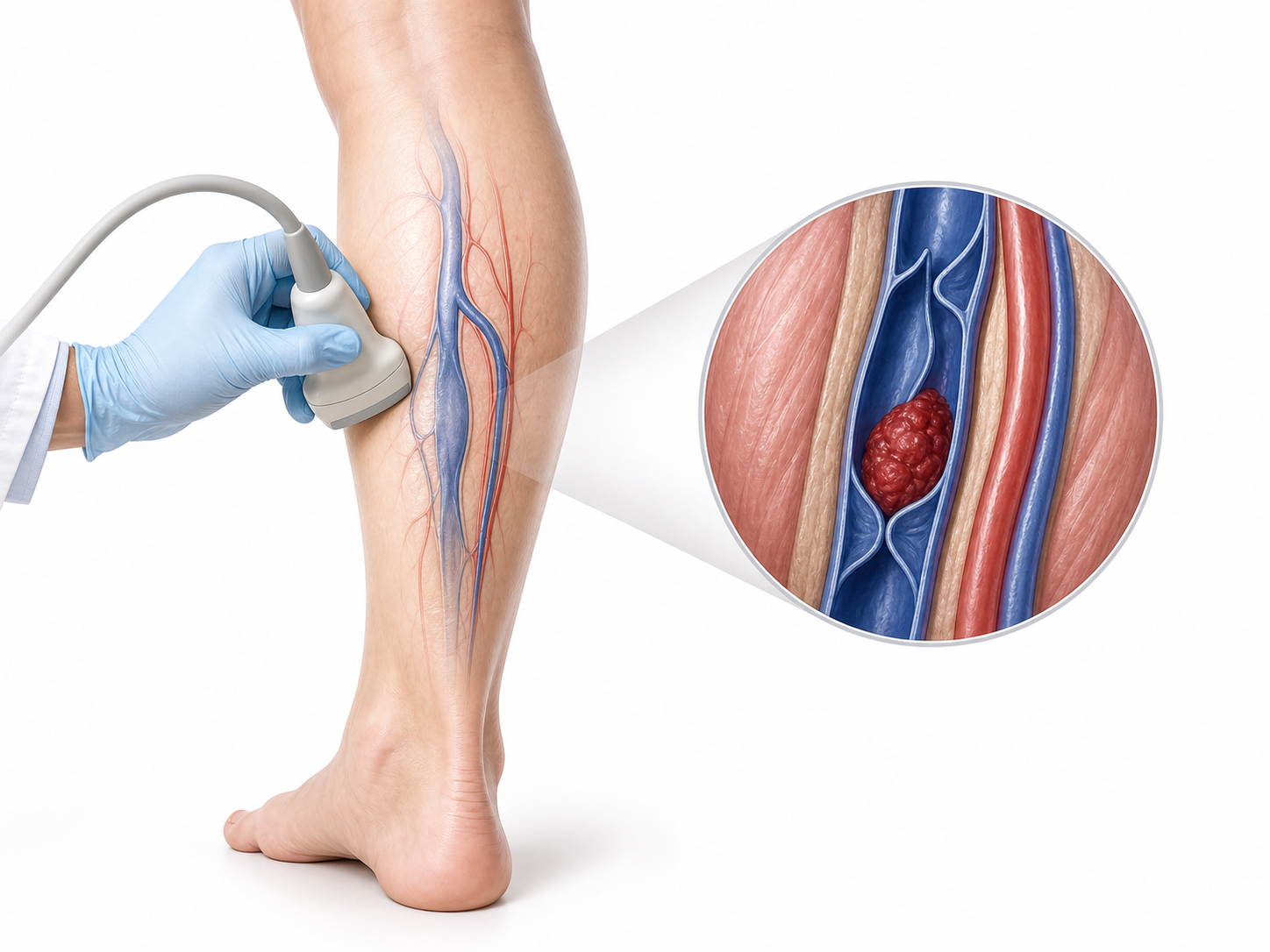
Deep vein thrombosis is a blood clot in a deep vein, most often in the leg. Symptoms can include one-sided swelling, pain, warmth, or redness, but symptoms alone cannot confirm the diagnosis.
Compression ultrasound is commonly used when leg DVT is suspected. The result must be considered with symptom timing, clot location, and clinical assessment.
Common Reasons for Referral
- Sudden swelling in one leg
- Calf or thigh pain or tenderness
- Warmth or redness in the affected leg
- Recent surgery, hospital admission, or reduced mobility
- Symptoms after prolonged travel or sitting
- Previous thrombosis, a clotting condition, or another clinician-defined concern
What Happens During the Examination
- 1You lie on an examination table with the relevant leg accessible
- 2Ultrasound gel is applied to the leg
- 3The deep veins are examined with the transducer
- 4Gentle compression is used to assess whether the veins close normally
- 5Doppler is used when needed to assess blood-flow patterns
Frequently Asked Questions
Related Vascular Services
Explore our comprehensive vascular diagnostic services available at International Hospital, Kuwait